
 Cart
Cart Products
CUT&Tag-IT® Assay Kit – Tissue Overview
Try CUT&Tag-IT Express for an easier CUT&Tag assay workflow
Learn More
Related Products:
- CUT&Tag-IT Express Assay Kit: Less variable and higher-throughput genome-wide profiling of histone marks
- CUT&Tag-IT® R-loop Assay Kit: Profile DNA-RNA Hybrid R-loops genome-wide
- CUT&Tag-Validated Antibodies: For best results with both tissue and cell samples
- Tissue Prep for NGS Assays: Tissue sample preparation for CUT&Tag
- pA-Tn5 Transposase: Recombinant transposase enzymes
- Nextera™-Compatible CDI and UDI Primers (1-96): Multiplex more than 16 samples
- CUT&Tag Workshops: Hands-on, in‑person workshops to advance your epigenomics expertise
Cleavage Under Targets and Tagmentation (CUT&Tag) is a method to investigate genomic localization of histone modifications and some transcription factors that reveals interactions between proteins and DNA or identifies DNA binding sites for proteins of interest.
Unlike MNase-Seq or ATAC-Seq methods that target open chromatin and are therefore dependent on chromatin accessibility, CUT&Tag utilizes an antibody-based enzyme tethering strategy to target specific histone modifications or proteins to reveal chromatin-binding information that is specific to those sites or proteins of interest.
CUT&Tag is based on the same principles as ChIP-Seq, but with several changes to the protocol that are advantageous in certain situations. Instead of the sonication of fixed chromatin and immunoprecipitation steps performed in ChIP-Seq protocols, in CUT&Tag, fresh (not frozen) unfixed cells are bound to concanavalin A beads and the antibody incubation is performed with cells in their native state. Directly following antibody binding, the chromatin is digested and NGS libraries are prepared in a single step by tagmentation using the protein A-Tn5 (pA-Tn5) transposome enzyme that has been pre-loaded with sequencing adapters.
CUT&Tag can rapidly produce high-quality results from less starting material than ChIP-Seq, and enables robust analysis from lower sequencing depths, saving both time and money.
CUT&Tag-IT® Assay Kit - Tissue Advantages
- Compatible with 0.5 – 10 mg tissue
- Includes specialized lysis buffer for tissue nuclei isolation
- Complete kit with optimized protocol including tissue strainers
- Developed for histone marks
- Sequencing-ready libraries without the laborious and costly steps of ChIP-Seq
- Low background signal enables lower sequencing depth
- No artifacts caused by formaldehyde crosslinking
Upgrade to CUT&Tag-IT Express, and use Tissue Prep for NGS Assays to process tissue samples for CUT&Tag.
How the CUT&Tag-IT® Assay Works

CUT&Tag vs. CUT&RUN vs. ChIP-Seq
| CUT&Tag | CUT&RUN | ChIP-Seq | |
|---|---|---|---|
| Performed Under Native Conditions? | Yes | Yes | No |
| Chromatin Fragmentation Method | Tn5-based tagmentation | MNase digestion | Sonication |
| Cell Number Requirements | ~250,000 nuclei | 500,000 cells | 1-10 million cells |
| Sequencing Depth Required * | 2 million reads ** | 8 million reads † | 20-50 million reads |
| Integrated Library Preparation? | Yes, uses tagmentation | No, separate library prep required | No, separate library prep required |
| Compatible Targets | Primarily histone modifications, some transcription factors and co-factors | Wide range of histone modifications, transcription factors, and co-factors | Wide range of histone modifications, transcription factors, and co-factors |
| Workflow Length | 1-2 days | 1-2 days | 2-3 days |
* Kaya-Okur et al. Nature Communications (2019) 10:1930
** For less abundant targets of interest, 8 to 10 million reads are recommended
† 25 million reads are recommended for transcription factor targets

CUT&Tag-IT® Assay Kit - Tissue Contents
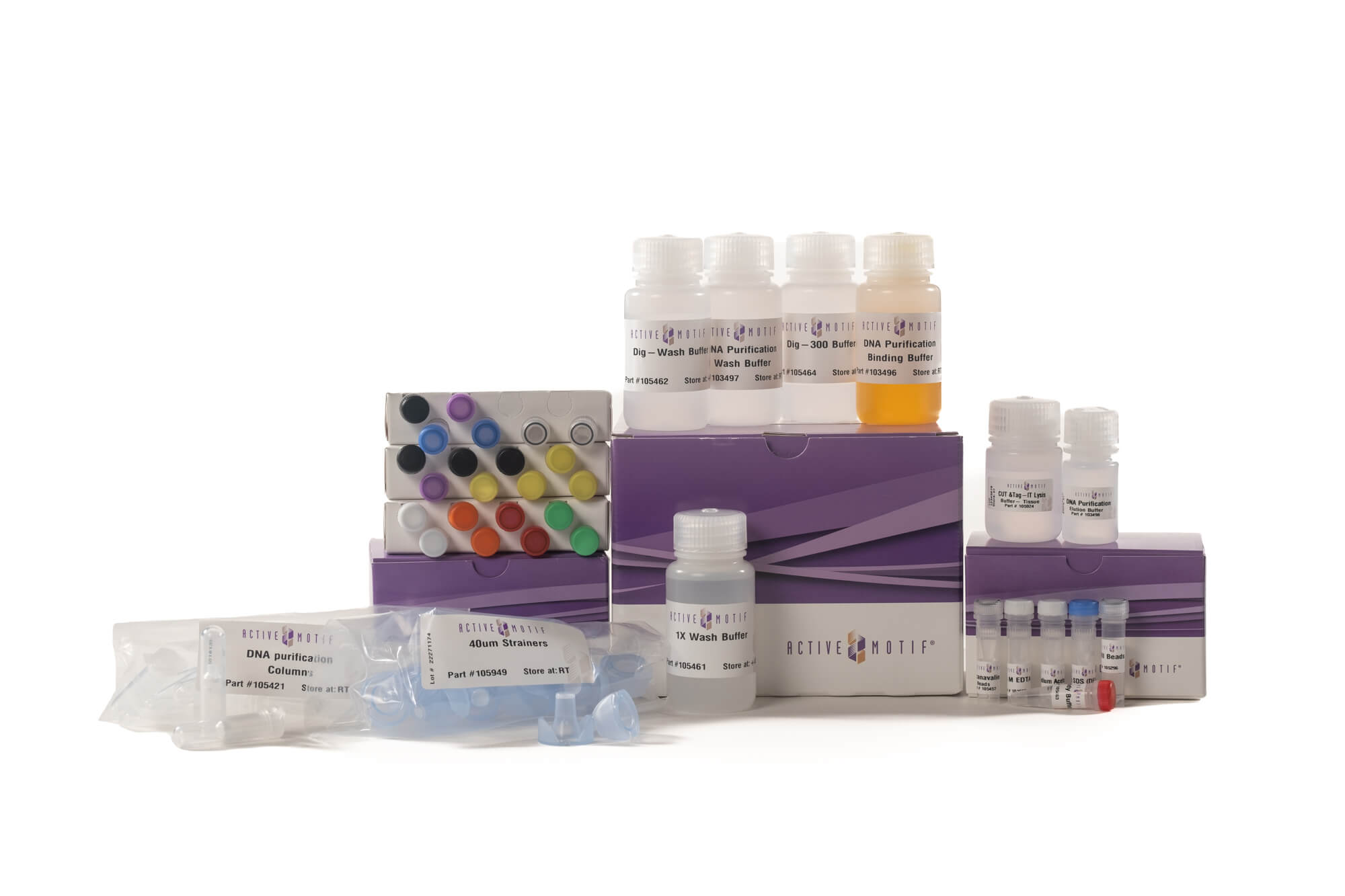
The CUT&Tag-IT® Assay Kit -Tissue components are shipped at two temperatures, with one box on dry ice for components to be stored at -20°C, and a second box at room temperature for components that are not to be frozen and must be stored at 4°C. Please store components according to the storage conditions in the manual after first use. All reagents are guaranteed stable for 6 months from date of receipt when stored properly.
Reagents included:
- 5% Digitonin, store at -20°C
- CUT&Tag-IT Lysis Buffer – Tissue, store at RT
- 40 µm Strainer, store at RT
- Concanavalin A Beads, store at 4°C
- CUT&Tag-IT® Assembled pA-Tn5 Transposomes, store at -20°C
- Tagmentation Buffer, store at -20°C or 4°C
- 1X Binding Buffer, store at 4°C
- 1X Wash buffer, store at 4°C
- Dig-Wash Buffer, store at 4°C
- Antibody Buffer, store at 4°C
- Dig-300 Buffer, store at 4°C
- Rabbit Anti-Mouse Antibody, store at -20°C
- Alpaca Anti-Rabbit IgG (H+L), store at -20°C
- Protease Inhibitor Cocktail, store at -20°C
- 0.5M EDTA, store at RT
- 10% SDS, store at RT
- 10 µg/µL Proteinase K, store at -20°C
- DNA Purification Columns, store at RT
- DNA Purification Binding Buffer, store at RT
- DNA Purification Wash Buffer, store at RT
- DNA Purification Elution Buffer, store at RT
- 3M Sodium Acetate, store at RT
- 10 mM DNTPs, store at -20°C
- 5X Q5 Buffer, store at -20°C
- Q5 High Fidelity DNA Polymerase (2U/µL), store at -20°C
- i5 Indexed Primer 1, store at -20°C
- i5 Indexed Primer 2, store at -20°C
- i5 Indexed Primer 3, store at -20°C
- i5 Indexed Primer 4, store at -20°C
- i7 Indexed Primer 1, store at -20°C
- i7 Indexed Primer 2, store at -20°C
- i7 Indexed Primer 3, store at -20°C
- i7 Indexed Primer 4, store at -20°C
- SPRI Beads, store at 4°C
Don’t forget to use an antibody validated for CUT&Tag!
Active Motif specializes in manufacturing high-quality antibodies to histones, histone modifications, chromatin proteins, and other factors, including a growing list of antibodies that we have experimentally validated in-house to work well in CUT&Tag assays. Check out our list of CUT&Tag-validated antibodies.
CUT&Tag-IT® Assay Kit - Tissue Data
 (Click image to enlarge)
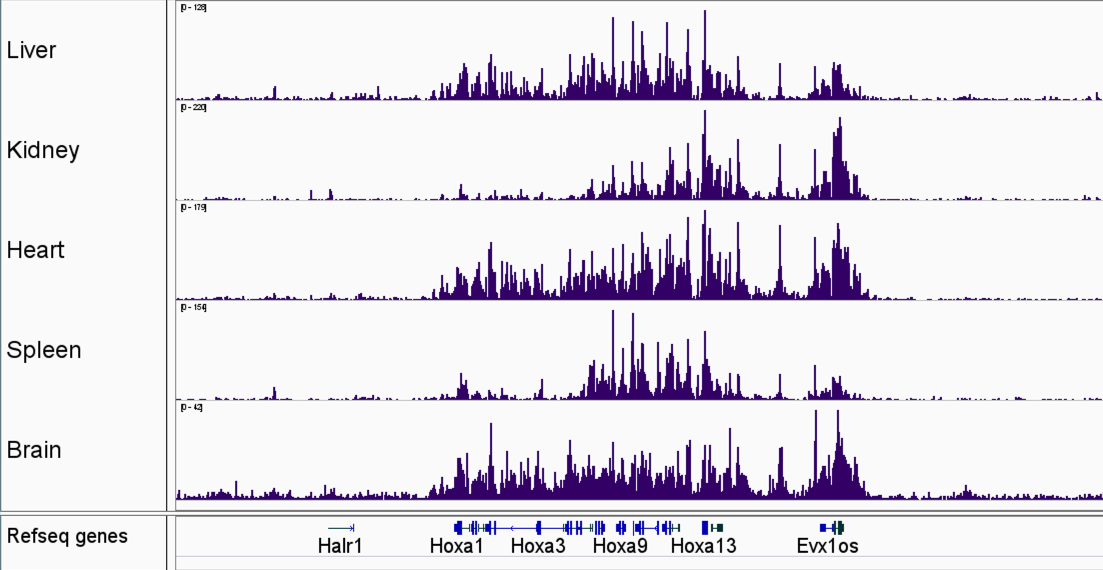
Figure 1: CUT&Tag-IT Assay Kit – Tissue data from Liver, Kidney, Heart, Spleen, and Brain samples.
Genome browser view of 10 mg each sample mouse liver, kidney, heart, spleen, and brain tissue assayed with CUT&Tag-IT Assay Kit - Tissue targeting H3K27me3 (cat. no 39155) at the HOX cluster.
 (Click image to enlarge)
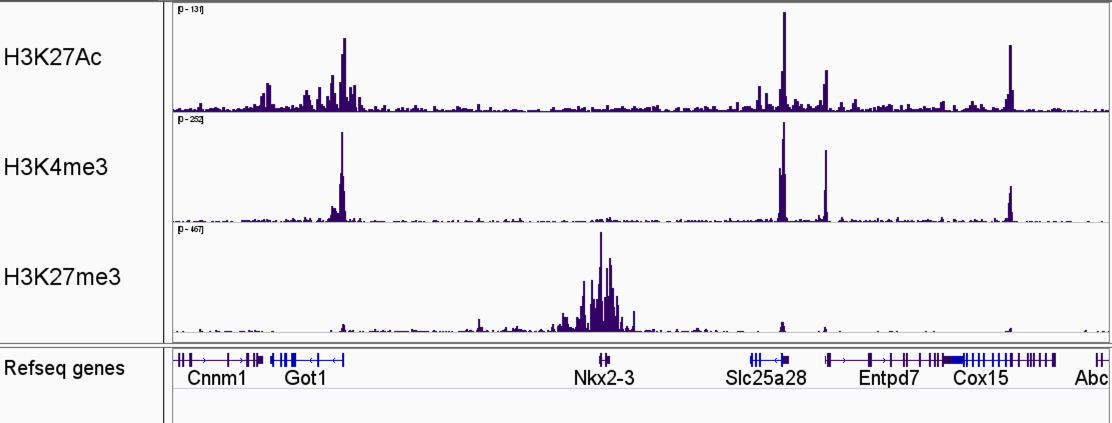
Figure 2: CUT&Tag-IT Assay Kit – Tissue data from 2 mg mouse spleen samples with multiple histone marks.
Genome browser view of 2 mg mouse spleen assayed with CUT&Tag-IT Assay Kit - Tissue targeting H3K27ac (cat. no. 39133), H3K4me3: cat. no. 39159, and H3K27me3 (cat. no 39155) at the Nkx2 locus.
 (Click image to enlarge)
Figure 3: CUT&Tag-IT Assay Kit – Tissue data from 0.5 to 10 mg mouse heart tissue samples.
Genome browser view of triplicate experimental CUT&Tag-IT Assay Kit - Tissue reactions for 0.5 mg, 1 mg, 5 mg, and 10 mg mouse heart samples targeting H3K27me3 (cat. no 39155).
CUT&Tag-IT® Assay Kit - Tissue FAQs
1. About CUT&Tag and When to Use It
CUT&Tag is a native, antibody-guided tagmentation method that profiles chromatin binding sites without fixation, sonication, or immunoprecipitation. Compared to ChIP-seq, CUT&Tag requires fewer cells, produces lower background, and generates sequencing-ready libraries in a single step.
- No crosslinking: Performed in native cells
- No sonication: Chromatin is cleaved by tethered pA-Tn5
- Lower input: Works with fewer starting cells
- Integrated library prep: Tagmentation generates sequencing-ready DNA
- Lower background: Higher signal-to-noise than ChIP-seq
- Lower sequencing depth: Fewer reads needed for robust results
These advantages make CUT&Tag-IT ideal for limited samples, rapid workflows, and cost-effective chromatin profiling.
Choose CUT&Tag when you have limited starting material and want high-resolution, low-background profiling of histone modifications or selected chromatin-associated proteins. CUT&Tag-IT is especially well suited for native cells, rapid workflows, and low sequencing depth.
- Best for: Histone marks and chromatin features
- Sample input: Low cell numbers
- Signal quality: High signal-to-noise, low background
- Workflow: Fast, integrated library preparation
For comprehensive analysis of genome-wide transcription factor binding—particularly for difficult or low-abundance targets—traditional ChIP-seq may still be preferred.
2. Kit Contents & General Compatibility
Yes. The CUT&Tag-IT® Assay Kit includes all core reagents required to perform CUT&Tag, including the pre-assembled protein A–Tn5 (pA-Tn5) transposomes loaded with sequencing adapters.
- Included: pA-Tn5 transposomes, buffers, and reaction components
- Not included: Standard laboratory equipment and general reagents
- Documentation: A complete list of additional materials is provided in the kit manual
The only items not supplied are standard lab consumables and instruments, which are listed under Additional Materials Required in the CUT&Tag-IT® Assay Kit manual.
No. The standard Active Motif ChIP-Seq Spike-In Normalization method is not compatible with the CUT&Tag-IT® Assay Kit.
CUT&Tag-IT uses a targeted, antibody-tethered tagmentation approach that does not support external spike-in controls designed for ChIP-Seq workflows.
No. CUT&Tag-IT does not require an INPUT control.
Unlike ChIP-Seq, CUT&Tag uses a tethered pA-Tn5 transposase that targets DNA only at antibody-bound sites. This targeted mechanism eliminates the need for an INPUT control to normalize background signal.
3. Tissue Sample Preparation
(Click image to enlarge)
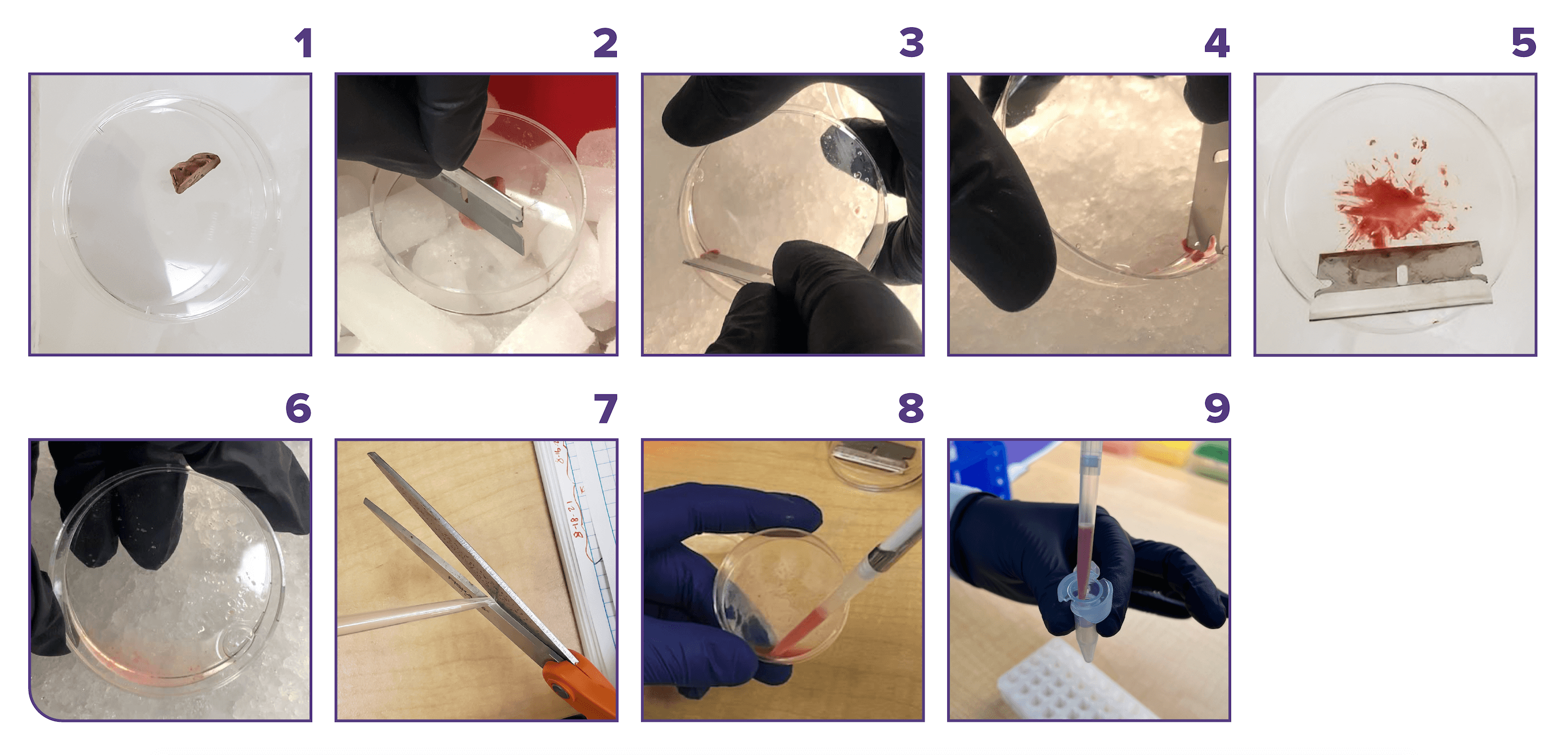
Photos 1–9 show a complete CUT&Tag tissue preparation workflow starting from mouse liver.
- Starting tissue
- Excising a small portion for the reaction
- Mincing the tissue into small chunks (edge of plate)
- Further chopping for uniform pieces
- Fine mincing to create a slurry
- Collecting tissue to the side of the plate
- Preparing a wide-bore tip by cutting a 1 mL tip
- Transferring tissue by pipetting
- Loading the strainer for downstream CUT&Tag processing
4. Controls, QC & Data Quality
Use H3K27me3 as the technical positive control and a no-primary-antibody sample as the negative control.
- Positive control: H3K27me3 antibody (Cat. No. 39157) — confirms reagent performance and workflow integrity
- Negative control: Secondary antibody only (no primary) — measures background from pA-Tn5 and the secondary antibody
These controls verify assay specificity and help distinguish true signal from background noise.
No—an IgG control is not required for CUT&Tag-IT.
CUT&Tag uses a tethered pA-Tn5 enzyme that is highly specific for antibody-bound genomic regions. Internal testing by Active Motif showed that an IgG control does not add meaningful information beyond the standard negative control.
- IgG controls are not used in downstream analysis
- IgG controls are not equivalent to INPUT controls used in ChIP-Seq
- Optional only if required for internal validation
Yes—library quality and concentration should always be checked before sequencing.
- Size distribution: Analyze libraries on a TapeStation or Bioanalyzer. Most fragments should be < 500 bp.
- Library concentration: Quantify using a KAPA Library Quantification Kit.
These QC steps ensure high-quality sequencing data and reduce the risk of failed runs.
5. Antibodies & Target Compatibility
Active Motif provides a curated list of antibodies validated specifically for CUT&Tag-IT.
View the full list of CUT&Tag-IT–validated antibodies here: CUT&Tag-validated antibodies
These antibodies have been tested for performance, specificity, and reproducibility with the CUT&Tag-IT workflow.
Not always. CUT&Tag and ChIP-Seq use very different workflows and binding conditions.
An antibody that performs well in ChIP-Seq does not necessarily work in CUT&Tag-IT. For reliable results, we recommend:
- Using CUT&Tag-IT–validated Active Motif antibodies, or
- Independently validating a ChIP-grade or ChIP-validated antibody in theCUT&Tag-IT workflow.
Antibody compatibility is one of the most important factors for successful CUT&Tag experiments.
Yes. The CUT&Tag-IT® Assay Kit is compatible with both monoclonal and polyclonal antibodies.
The assay supports antibodies raised in mouse or rabbit, which bind efficiently to the pA-Tn5 transposome used in the CUT&Tag-IT workflow.
Tagged proteins have not been formally validated with CUT&Tag-IT.
However, in principle, CUT&Tag-IT should work with tagged proteins if a high-quality antibody against the tag is used. Performance may vary, so validation with your specific tag and target is recommended before running large experiments.
6. Indexing, Multiplexing & qPCR
Yes. The CUT&Tag-IT® Assay Kit includes 4×4 unique dual indexes for multiplexing up to 16 samples.
To multiplex more than 16 samples (up to 96), use Active Motif’s Nextera™-Compatible CDI and UDI Primers (1-96).
These primers match Illumina Nextera index sets (N701–N704 and N501–N504) and are supplied at 25 µM for direct use. You may also combine other Nextera-compatible primers at the same concentration.
Yes, but with important limitations. CUT&Tag-IT libraries can be analyzed by qPCR, however the results may be unreliable.
Because Tn5 inserts sequencing adapters at random positions, many fragments will not contain both primer binding sites. As a result, gene-specific qPCR primers may fail to amplify all target fragments.
Implication: qPCR can underestimate library abundance or target enrichment and should not be used as a quantitative replacement for sequencing.
They are dual-indexed.
Each CUT&Tag-IT library contains two unique index sequences (i7 and i5), enabling accurate sample demultiplexing and reducing index hopping on Illumina platforms.
No. CUT&Tag-IT libraries do not include molecular identifiers (UMIs).
Duplicate reads should be handled using standard alignment and duplicate-removal tools rather than UMI-based collapsing.
7. Sequencing & Bioinformatics
Paired-end sequencing is recommended.
Paired-end reads improve fragment mapping accuracy, peak resolution, and alignment confidence for CUT&Tag data.
We recommend paired-end 2 × 38 bp (PE38).
Although this is shorter than the read length reported in the original Henikoff CUT&Tag paper, Active Motif has not observed reduced mapping rates or data quality with PE38.
Longer read lengths may also be used if desired.
CUT&Tag data is analyzed using standard ChIP-Seq bioinformatics workflows.
Active Motif recommends aligning reads with BWA and performing peak calling with MACS2.
Downstream analysis (signal tracks, peak annotation, and differential binding) can be performed using the same tools and pipelines commonly used for ChIP-Seq datasets.
Questions about sample library QC? Read more on our blog.
CUT&Tag-IT® Assay Kit - Tissue Documents
You might also be interested in:
- CUT&Tag-IT® Express Kit
- CUT&Tag-IT® R-loop Assay Kit
- [Podcast] Multiple challenges of CUT&Tag
- Comprehensive Guide to Understanding and Using CUT&Tag Assays
- End-to-End CUT&Tag Services
- ATAC-Seq Kits
- View Epigenetic Services
- Browse All Epigenetics Resources
- CUT&Tag Workshops
US Pat. No. 10,689,643, EP Pat. No. 2999784 and related patents and applications
Permitted Use; Resale Prohibited
In the absence of an express written agreement to the contrary, all products are sold and services deliverables are provided by Active Motif for (a) internal in vitro research purposes only and may not be used for services or any other commercial purpose (b) the exclusive use of the original purchaser, and are not to be resold. You agree not to reverse engineer or otherwise attempt to discover the structure or composition of products or services deliverables unless we otherwise agree in writing.
| Name | Format | Cat No. | Price | |
|---|---|---|---|---|
| CUT&Tag-IT® Assay Kit - Tissue | 16 rxns | 53170 | Find Distributor |
