
 Cart
Cart Products
Fixed Cell ATAC-Seq Kit Overview
Related Products:
- ATAC-Seq Express Kit: Perform ATAC-Seq on fresh or frozen cells or tissues
- ATAC-Seq Spike-In Control: Overcome variation between ATAC-Seq datasets
- Tn5 and Pre-indexed Assembled Tn5 Transposomes: Pre-loaded ready-to-use transposomes for up to 96 ATAC-Seq reactions and recombinant Tn5 transposase enzyme
- Nextera™-Compatible CDI and UDI Primers (1-96): Multiplex more than 16 samples
- Diversi-Phi Indexed PhiX: Reliable diversity for every Illumina sequencing run
ATAC-Seq is a rapid assay that allows analysis of epigenetic profiles across the genome by identification of regions that have open or accessible chromatin states. Because of the assay’s speed, simplicity, and applicability to a wide range of sample types, ATAC-Seq has become a commonly-used epigenetic assay, and it can serve as a gateway to further, more detailed epigenetic analyses.
In the Fixed Cell ATAC-Seq assay, intact nuclei from formaldehyde-fixed cell samples are treated with a hyperactive Tn5 transposase mutant. This transposase simultaneously tags the target DNA with sequencing adapters and fragments the DNA in a process termed tagmentation.
The Fixed Cell ATAC-Seq Kit from Active Motif provides the reagents necessary to produce 16 unique sequencing-ready Illumina®-compatible ATAC-Seq libraries from 50,000 – 100,000 formaldehyde-fixed cells per reaction. The optimized protocol guides you through the steps for sample preparation, tagmentation and library preparation, yielding next-gen sequencing-ready libraries that can be multiplexed in a single flow cell sequencing run.
Fixed Cell ATAC-Seq Kit Highlights:
- Compatible with formaldehyde-fixed cell samples
- Requires only 50,000 to 100,000 cells per reaction
- Simple and rapid optimized protocol & reagents
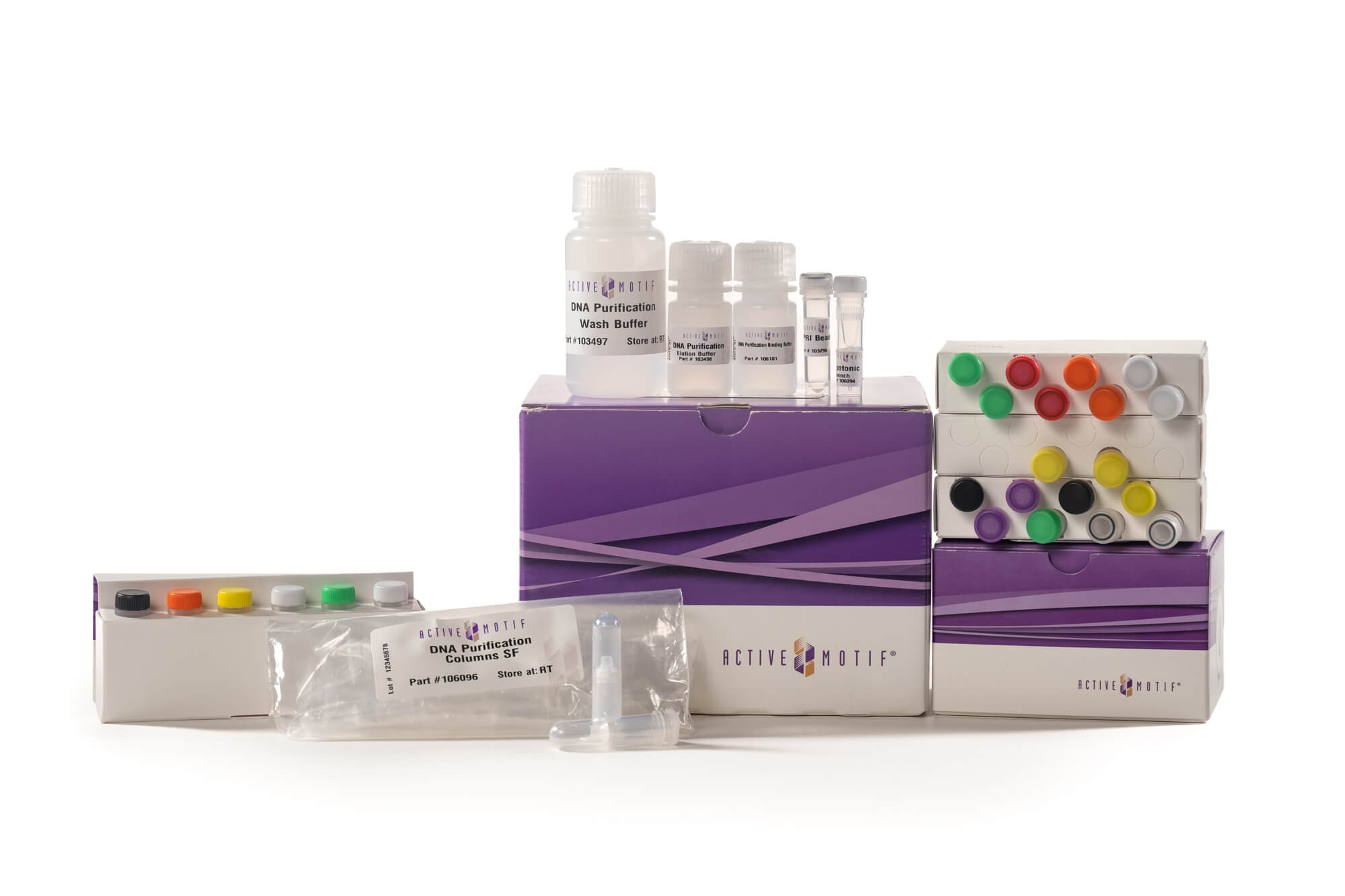
Fixed Cell ATAC-Seq Kit Contents
The Fixed Cell ATAC-Seq Kit is shipped at two temperatures, with one box on dry ice for components to be stored at -20°C, and a second box at room temperature for components to be stored at room temperature or 4°C. Please store components according to the storage conditions in the manual after first use. All reagents are guaranteed stable for 6 months from date of receipt when stored properly.
Reagents included:
- Hypotonic Buffer, store at RT
- Hypotonic Quench, store at 4°C
- Releasing Buffer, store at RT
- Proteinase K, store at -20°C
- RNase A, store at -20°C
- Protease Inhibitor Cockatil, store at -20°C
- Assembled Transposomes, store at -20°C
- 2X Tagmentation Buffer, store at -20°C
- 10X PBS, store at RT
- 10% Tween 20, store at RT
- 1% Digitonin, store at -20°C
- 0.5 M EDTA, store at RT
- DNA Purification Columns SF, store at RT
- DNA Purification Binding Buffer, store at RT
- DNA Purification Wash Buffer, store at RT
- DNA Purification Elution Buffer, store at RT
- 3 M Sodium Acetate, store at RT
- 10 mM dNTPs, store at -20°C
- 5X Q5 Buffer, store at -20°C
- Q5 High-Fidelity DNA Polymerase, store at -20°C
- i7 Indexed Primer 1, store at -20°C
- i7 Indexed Primer 2, store at -20°C
- i7 Indexed Primer 3, store at -20°C
- i7 Indexed Primer 4, store at -20°C
- i5 Indexed Primer 1, store at -20°C
- i5 Indexed Primer 2, store at -20°C
- i5 Indexed Primer 3, store at -20°C
- i5 Indexed Primer 4, store at -20°C
- SPRI Beads, store at 4°C
Fixed Cell ATAC-Seq Kit Data
The Fixed Cell ATAC-Seq kit contains the necessary reagents and enzymes to perform 16 ATAC-Seq reactions on formaldehyde-fixed cell samples. These kit components are optimized to work efficiently and have been validated to generate high-quality ATAC-Seq data.
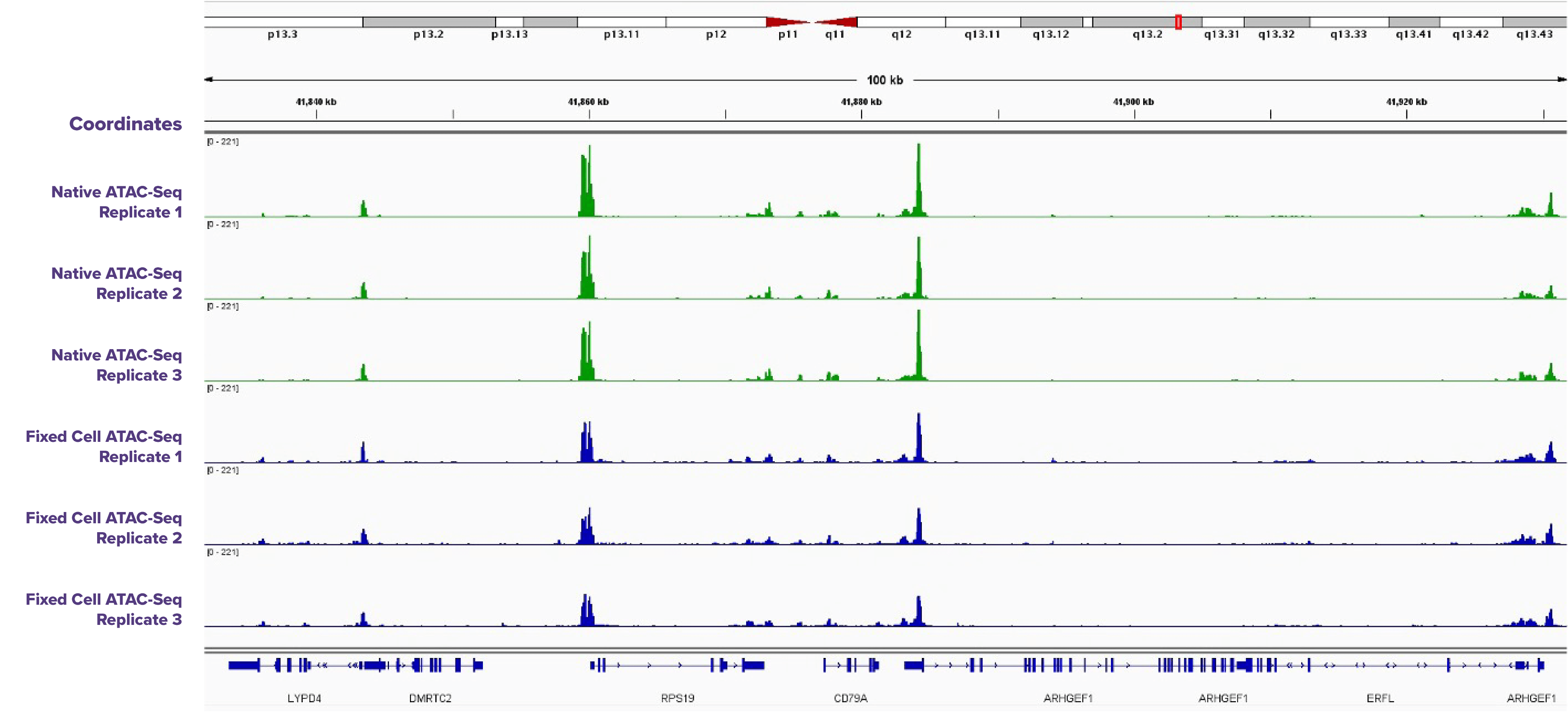
Fixed Cell ATAC-Seq Results Compared with Native Cell ATAC-Seq Results
(Click image to enlarge)
Figure 1: Fixed Cell ATAC-Seq Compared to ATAC-Seq on Native Frozen Cell ATAC-Seq
Peak profiles are similar between Fixed Cells and Native Cells. Fixed Cell ATAC-Seq in general yields higher background results and lower peak intensity.
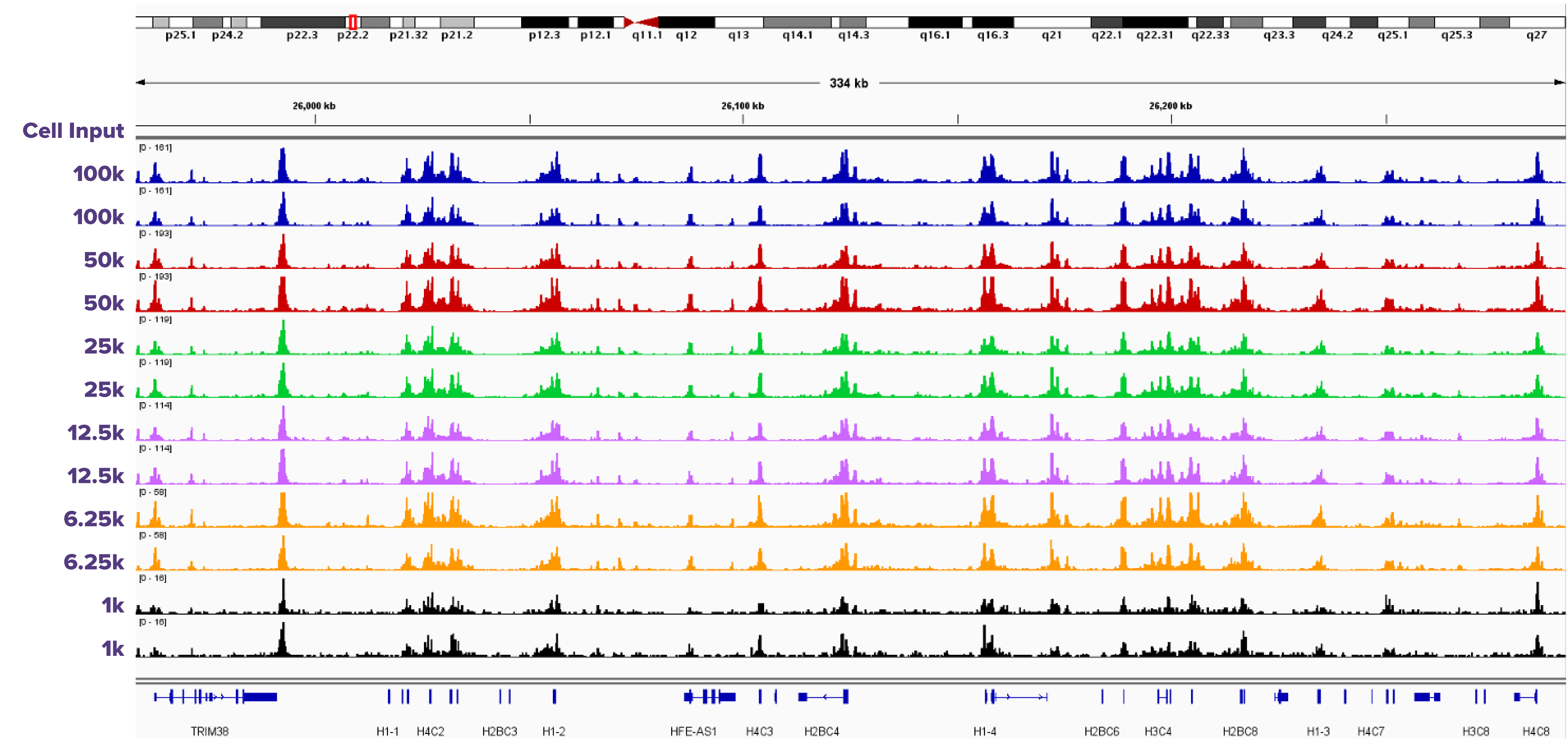
Fixed Cell ATAC-Seq is Compatible with 1,000 to 100,000 Formaldehyde-Fixed Cells
(Click image to enlarge)
Figure 2. Fixed Cell Titration ATAC-Seq Results
Duplicate samples of 1,000, 6,250, 12,500, 25,000, 50,000, and 100,000 formaldehyde-fixed K562 cells were assayed with the Fixed Cell ATAC-Seq kit. Higher background was observed with lower cell numbers, and peak profiles were consistent.
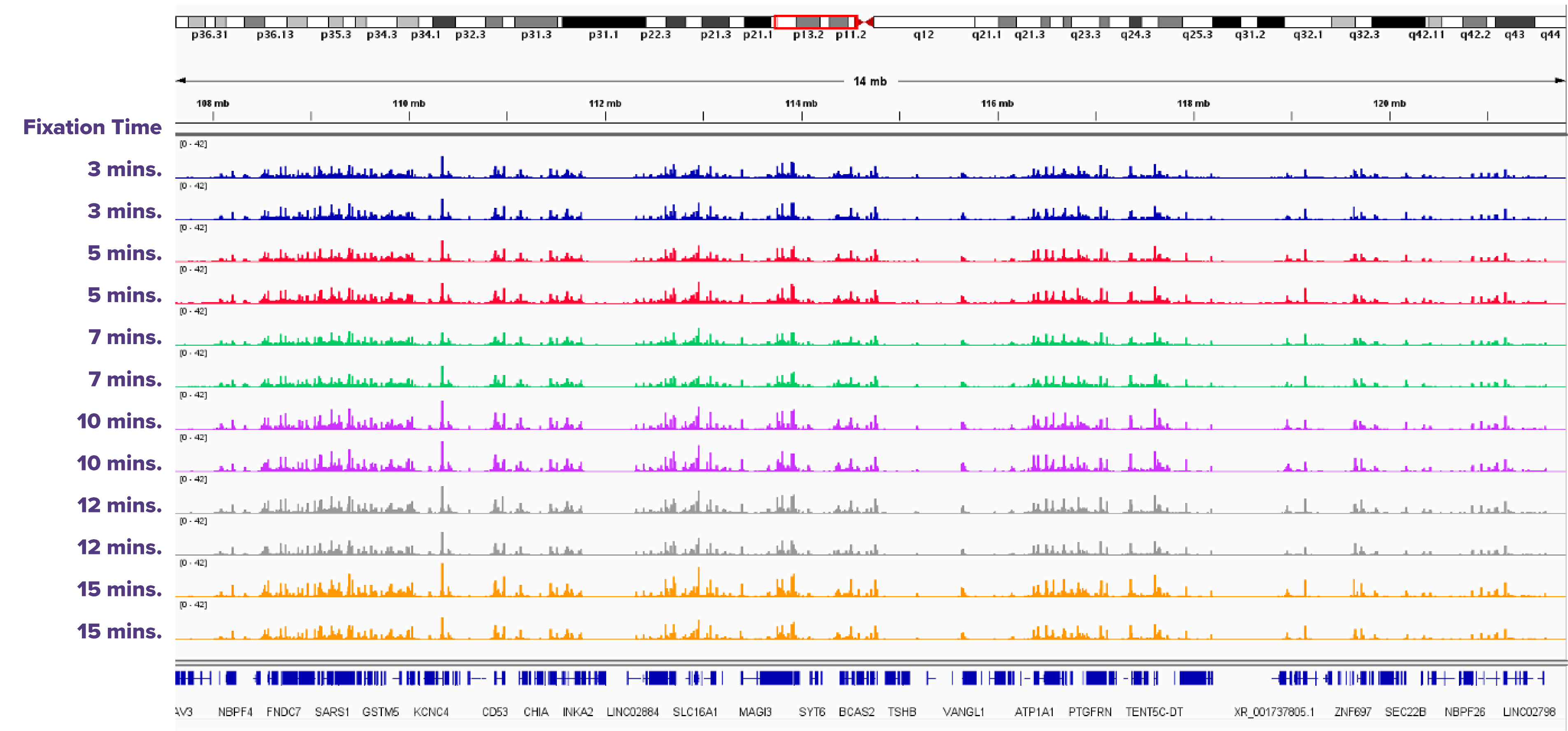
Formaldehyde Fixation Time from 3 to 15 Minutes of Fixation
(Click image to enlarge)
Figure 3. Fixation Time Titration of 50,000 K562 Cell Aliquots
Duplicate samples of 50,000 K562 cells were fixed with formaldehyde for 3,5, 7, 10, 12, and 15 minutes. Higher background was observed in cells fixed for less than 10 minutes.
Fixed Cell ATAC-Seq is Compatible with Formaldehyde-Fixed Sorted Blood Cells
(Click image to enlarge)
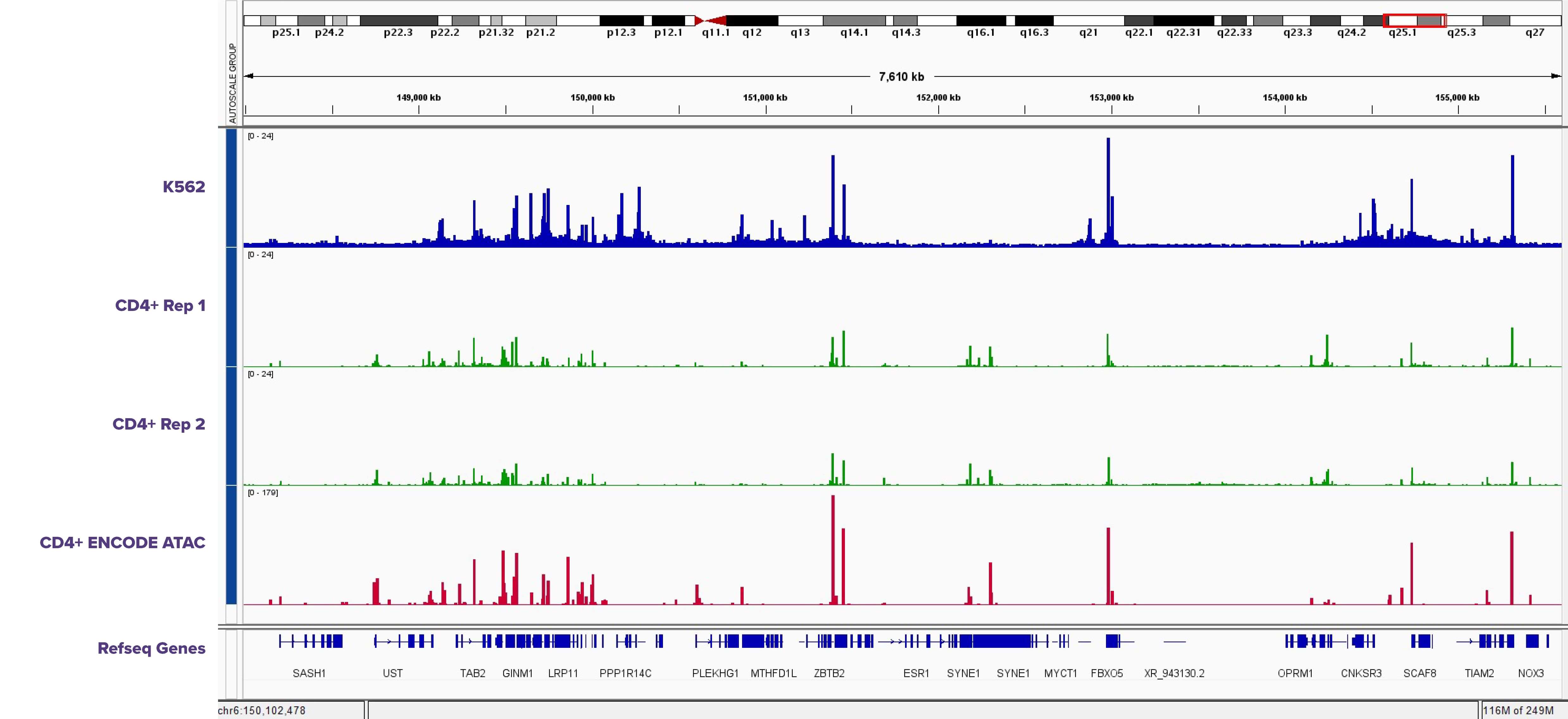
Figure 4. Genome browser tracks of sorted CD4+ cells from human blood samples compared with K562 cells and ENCODE CD4+ data.
Fixed Cell ATAC-Seq was performed on 200,000 formaldehyde-fixed sorted CD4+ human blood cells and 200,000 formaldehyde-fixed K562 cells. Similar peak profiles were observed betweeen the formaldehyde-fixed CD4+ blood cells and the ENCODE CD4+ data, and some differences in peaks were observed between the formaldehyde-fixed CD4+ blood cells and formaldehyde-fixed K562 cells.
(Click image to enlarge)
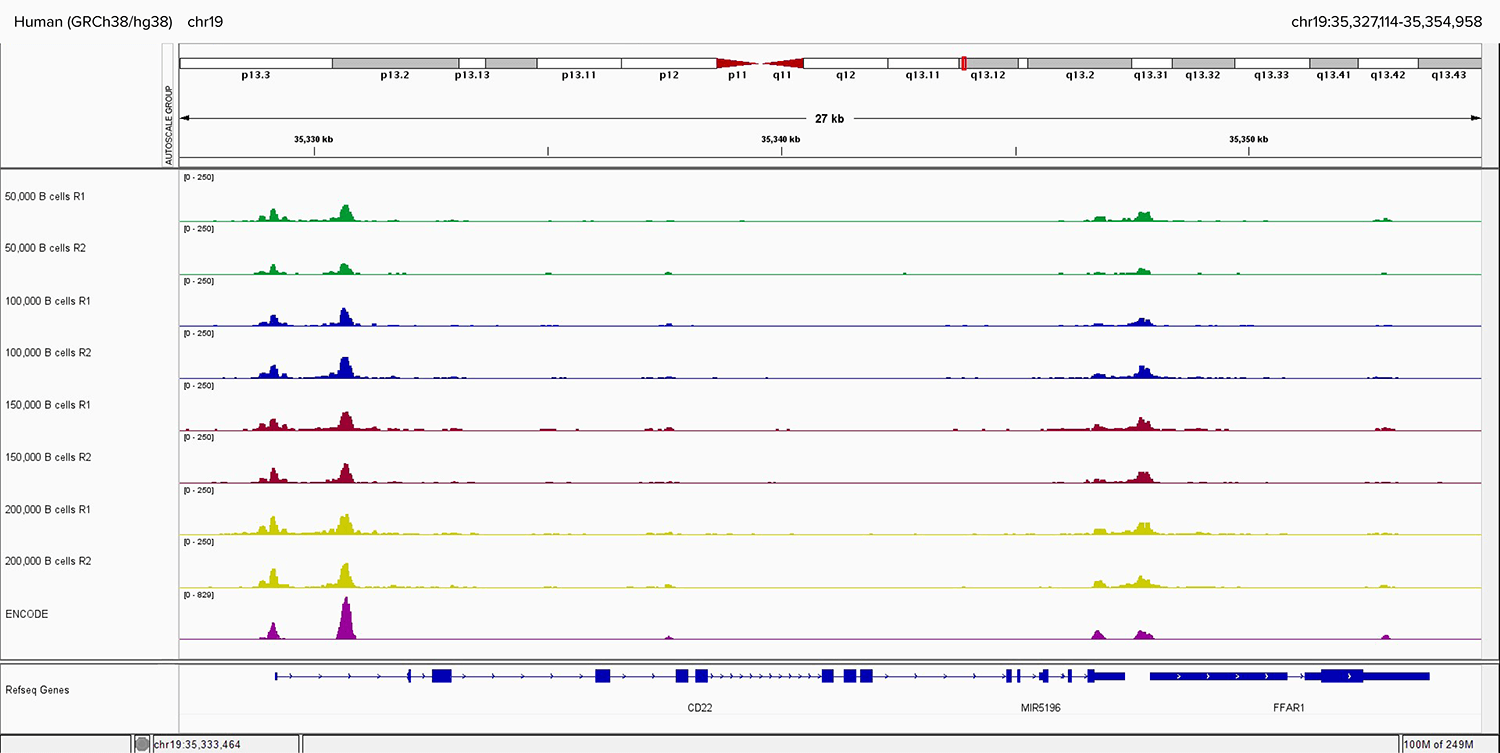
Figure 5. Genome Browser Results of Sorted and Formaldehyde-fixed Human B Cell Titration in Fixed Cell ATAC-Seq.
Sorted and formaldehyde-fixed B cells were run in duplicates of 50,000, 100,000, 150,000, and 200,000 cells. Genome browser data shown at the CD22 locus alongside ENCODE native human B cell ATAC-seq data.
Fixed Cell ATAC-Seq FAQs
1. Kit Overview & Experimental Design
The Fixed Cell ATAC-Seq Kit is optimized for chromatin accessibility profiling in formaldehyde-fixed cells, whereas the Native ATAC-Seq Kit or ATAC-Seq Express Kit is designed for fresh or unfixed cells.
- Sample type: Fixed cells preserve cell structure and allow safer handling and long-term storage.
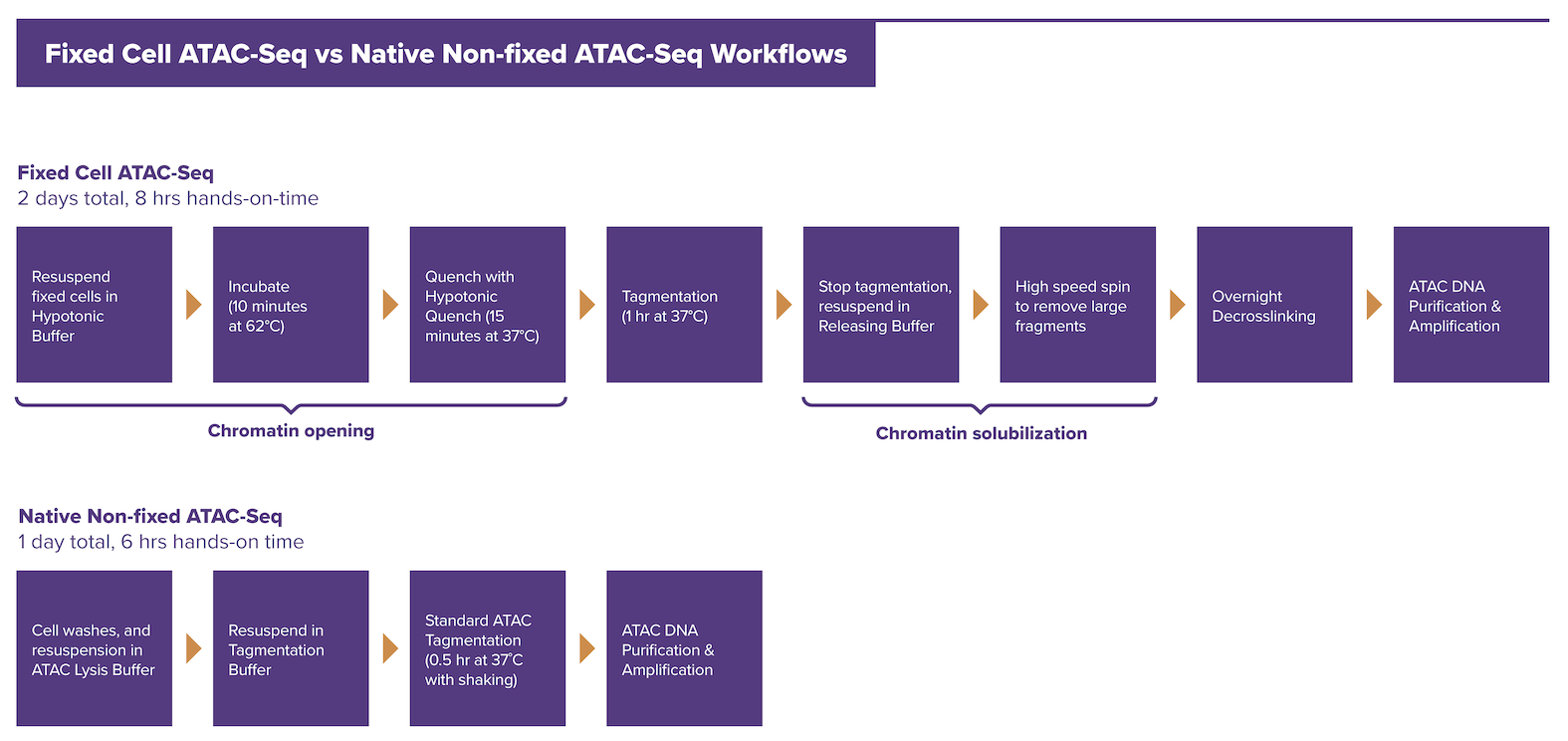
- Workflow differences: The fixed-cell protocol includes additional steps for crosslinking reversal and chromatin release.
- Data characteristics: Fixed samples show higher background than native samples due to crosslinking but still produce high-quality chromatin accessibility maps.
(Click image to enlarge)
Optimal fixation uses fresh, methanol-free formaldehyde. Follow the kit manual for the recommended fixation protocol. We recommend 16% formaldehyde provided in ampules, such as Pierce™ 16% Formaldehyde (w/v), Methanol-free, Catalog No. 28906 from Thermo Fisher Scientific. If preparing your own formaldehyde solution, it should be added fresh immediately before fixing the samples to ensure effective crosslinking.
- Recommended fixative: 16% methanol-free formaldehyde
- Commercial option: Pierce™ 16% Formaldehyde (Catalog No. 28906)
- Alternative: Prepare fresh formaldehyde immediately before use
- Tip: Using fresh fixative ensures reproducible crosslinking and optimal ATAC-Seq results
No, sonicating fixed cell samples does not improve ATAC-Seq results. Testing showed that sonication did not enhance library quality or data output for fixed cell samples.
- Recommendation: Do not sonicate fixed cells
- Effect: No improvement in library quality or data consistency
- Best practice: Follow the standard fixation and ATAC-Seq workflow as described in the kit manual
2. Workflow Troubleshooting & Reaction Failures
The most common reason for no library formation is sample loss during buffer removal steps. It is important to leave a small volume of sample behind during specific steps to avoid losing nuclei.
- Leave 10 µL of sample at Step 11 during removal of Hypotonic Buffer
- Leave 10 µL of sample at Step 19 after the high-speed spin and buffer exchange into Releasing Buffer
- Cause: Complete aspiration at these steps can remove nuclei and prevent library preparation
- Recommendation: Use low-retention tips and visually confirm pelleted nuclei before aspiration
The most common cause of reaction failure is insufficient mixing during the Tagmentated DNA Releasing step (Step 22). Pipetting 10 - 30 times and vortexing every 10 minutes during this step is essential—the experiment will fail without it. Proper mechanical disruption is required to release DNA from fixed chromatin.
- Critical step: Step 22 – Tagmentated DNA Releasing
- Required action: Pipette the sample 10–30 times
- Additional step: Vortex briefly every 10 minutes
- Reason: Without sufficient mixing, DNA is not released and the ATAC-Seq library cannot be prepared
High background is expected when using fixed cells in ATAC-Seq. Fixed cells consistently show higher background compared to native (unfixed) cells due to crosslinking and chromatin alterations during fixation. For detailed discussion, see Zhang et al. 2022 (Reference 4).
- Expected effect: Higher background signal in fixed cells
- Comparison: Background is lower in native/unfixed cells
- Reference: Zhang et al. 2022
- Tip: Analyze background levels considering fixation method when interpreting results
3. Reagents, Handling & Kit Use
Most reagents can be thawed and prepared at room temperature, but two components must remain cold on ice.
- Thaw at room temperature: All buffers, master mixes, and general kit components
- Keep on ice (do NOT thaw):
- Assembled Transposomes
- Q5 DNA Polymerase
- Reason: These two components contain glycerol and are already in a liquid state
- Re-freezing guidance: Other kit components may be thawed and re-frozen for future use
- Tip: You do not need to process all 16 reactions at once; reagents can be reused
4. Library QC & Sequencing
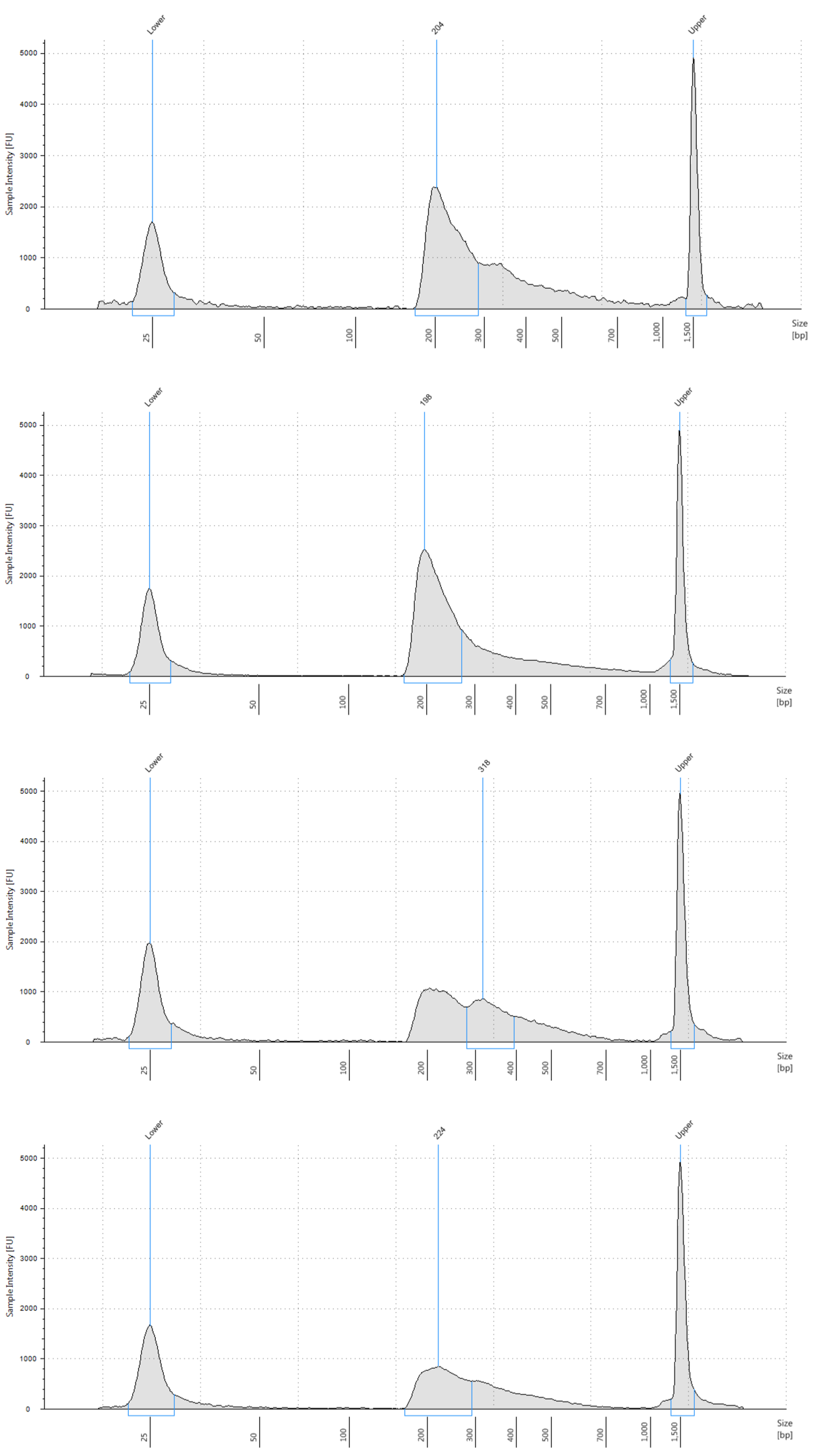
The expected ATAC-Seq library fragments range from approximately 250 bp to 1000 bp, with an oscillation period of ~150 bp corresponding to nucleosome spacing. Proper library size distribution indicates successful tagmentation and preparation.
- Fragment size range: 250–1000 base pairs
- Oscillation period: ~150 bp (reflecting nucleosome pattern)
- Quality check: Fragment analyzer or Bioanalyzer traces should show this expected distribution
- Visual reference: Library traces image
(Click image to enlarge)
Typically, 30 million paired-end reads per sample are sufficient, with 20 million paired-end reads being the minimum for reliable ATAC-Seq results. The exact number of reads depends on the genome size of the sample and the depth of analysis required.
- Recommended reads: 30 million paired-end reads
- Minimum reads: 20 million paired-end reads
- Considerations: Larger genomes or more complex analyses may require more sequencing depth
- Goal: Adequate coverage for reproducible chromatin accessibility profiling
The ATAC-Seq Kit comes with 4x4 unique dual indexes for 16 samples. If you want to multiplex more than 16 samples, the Nextera™-Compatible Multiplex Primers (96 plex) kit (Cat. No. 53155) allows up to 96 reactions. These primers are provided at 25 µM and can be used directly with the ATAC-Seq Kit. Alternatively, other Illumina Nextera primers at the same concentration can be combined for additional multiplexing options.
- Default kit capacity: 16 unique samples (4x4 dual indexes)
- Extended multiplexing: Up to 96 samples with Nextera-Compatible Multiplex Primers kit (Cat. No. 53155)
- Primer concentration: 25 µM, ready-to-use with ATAC-Seq Kit
- Alternative: Combine other Illumina Nextera primers at 25 µM for custom multiplexing
Related product: Nextera™-Compatible CDI and UDI Primers (1-96)
Fixed Cell ATAC-Seq Kit Documents
You might also be interested in:
| Name | Format | Cat No. | Price | |
|---|---|---|---|---|
| Fixed Cell ATAC-Seq Kit | 16 rxns | 53151 | ¥15,600 | Add to Cart |
