
 Cart
Cart Products

ATAC-Seq Services Overview

Assay for Transposase Accessible Chromatin Sequencing (ATAC-Seq) is used for genome-wide mapping of open chromatin, where gene regulatory elements such as promoters, enhancers, and insulators are active.
Why study open chromatin?
- Generate genome-wide open chromatin signatures in different patient populations
- Identify transcription factors and gene regulatory elements that drive disease
- Gain mechanistic insight into the gene regulatory response to treatments
- Develop models of dynamic chromatin reorganization during different stages of cell differentiation and development
ATAC-Seq is a perfect first step for those exploring the role of epigenetics in cell systems or disease models as it doesn’t require prior knowledge of gene regulation mechanisms.
The ATAC-Seq assay includes:
- Cell or tissue preparation
- Transposase reaction
- Library amplification
- Sequencing on an Illumina platform
- Bioinformatic analysis
Sample Types
Active Motif’s services will generate ATAC-Seq data from the following sample types:
- Human and animal tissues (including xenografts and human biopsies)
- Primary cells (including T and B cells)
- FACS sorted cells, including from rare cell populations

Join the Leading Researchers Using Active Motif's ATAC-Seq Services















What our customers are saying about us:
"I am studying the epigenetic regulation of heart failure. I have had a very good experience with Active Motif Epigenetic services and I will continue research with Active Motif in the future. I received good support from both the Sales Department and the Tech Support Team to help me to go through all the aspects of the service."
Ning Feng, MD, PhD
University of Pittsburgh
View complete list of testimonials >

ATAC-Seq Services Data
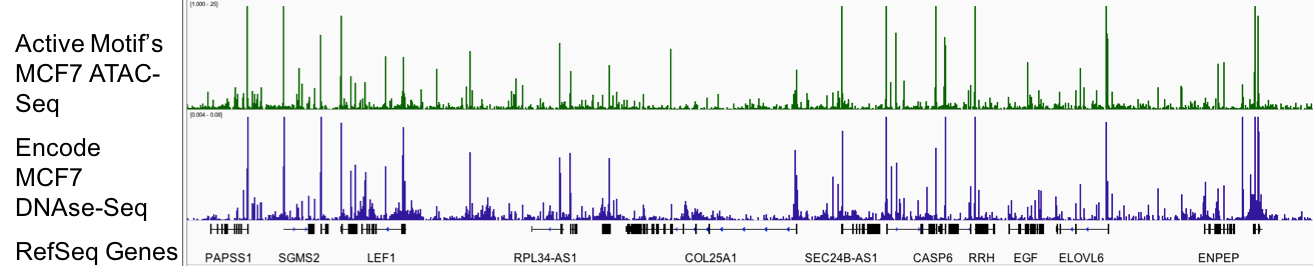
Figure 1: Active Motif’s ATAC-Seq assay reliably detects regions of open chromatin.
DNAse-Seq, which has long been the gold standard for generating genome-wide profiles of open chromatin, is shown in blue. The utility of DNAse-Seq has been limited since it requires tens of millions of cells and is technically challenging. Active Motif’s ATAC-Seq (shown in green), uses only 50,000 cells and provides data that is comparable to DNAse-Seq.
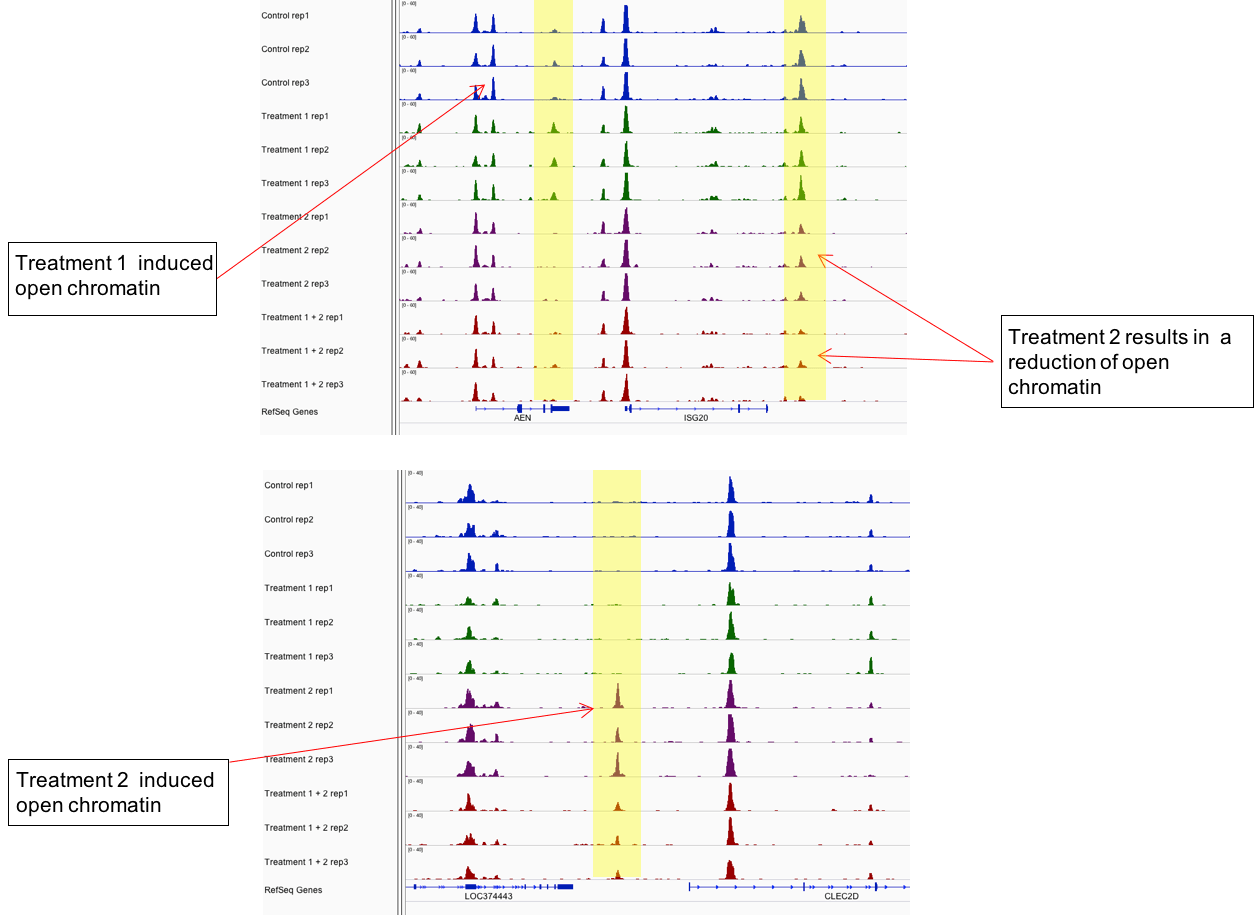
Figure 2: Active Motif’s ATAC-Seq assay distinguishes sample groups by identifying chromatin regions that are differentially open.
The example above shows ATAC-Seq data from 4 different samples, each performed in triplicate. Differentially open regions are highlighted in yellow.
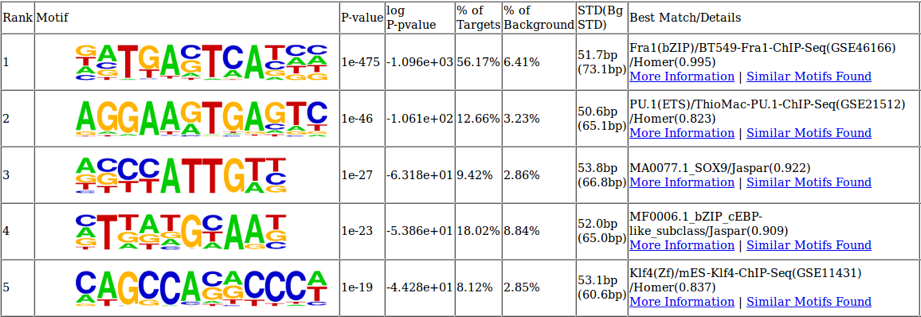
Figure 3: Identifying important transcription factor binding sites using ATAC-Seq
The underlying DNA sequence of differentially open chromatin regions can be analyzed to identify the most enriched transcription factor binding sites. In this cell system the two most enriched binding motifs are also relevant to B cell biology. Fra1 is quickly upregulated upon B cell activation and PU.1 is a key regulator of B cell fate specification.
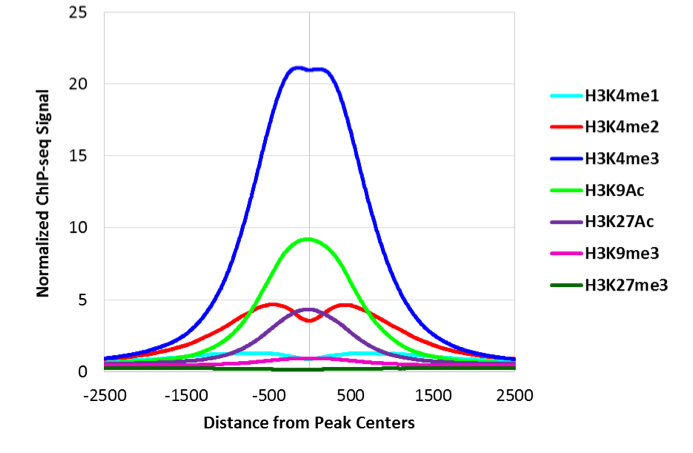
Figure 4: Distribution of Histone Modifications Relative to ATAC-Seq Peaks at Annotated Promoters
Comparison of ATAC-Seq data to different histone modification ChIP-Seq data sets reveals that ATAC-Seq peaks at promoters are most enriched for H3K4me3 and H3K9Ac.
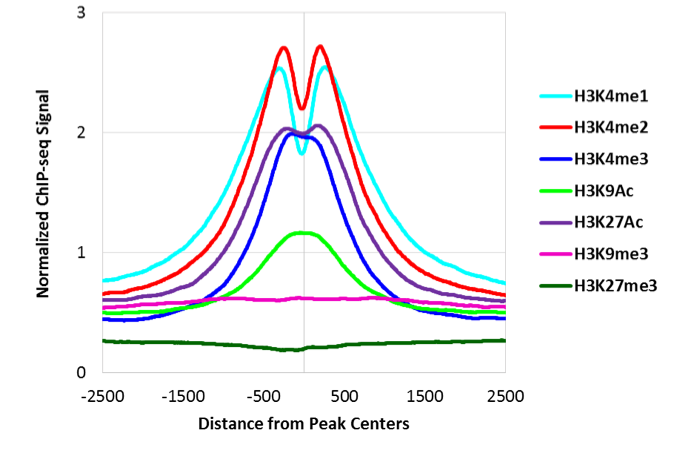
Figure 5: Distribution of Histone Modifications Relative to ATAC-Seq Peaks Outside of Annotated Promoters
ATAC-Seq peaks outside promoters are enriched for all active marks including the enhancer marks H3K27Ac and H3K4me1.
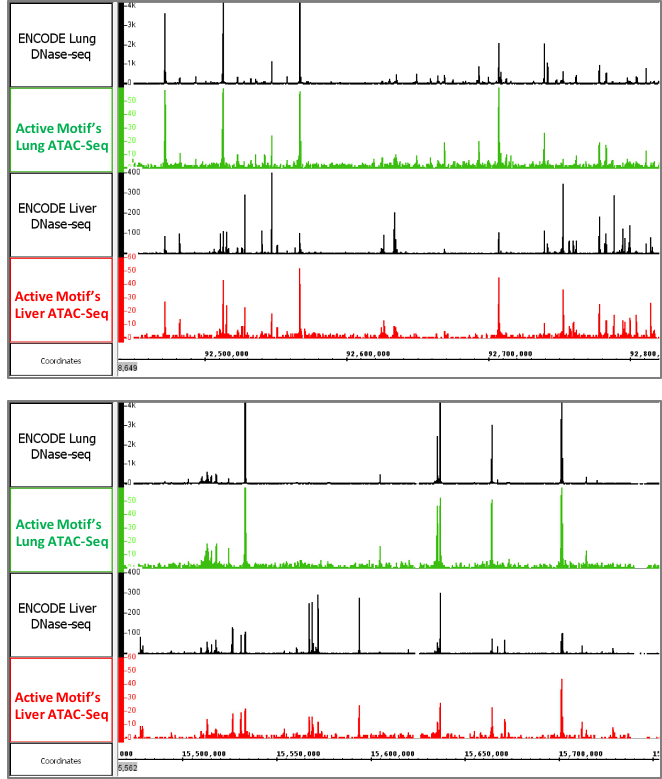
Figure 6: Active Motif’s ATAC-Seq data generated from tissues
The images above show ATAC-Seq data generated using frozen mouse liver and lung tissue. The open chromatin profiles are similar to DNAse-Seq profiles generated by the ENCODE consortium.
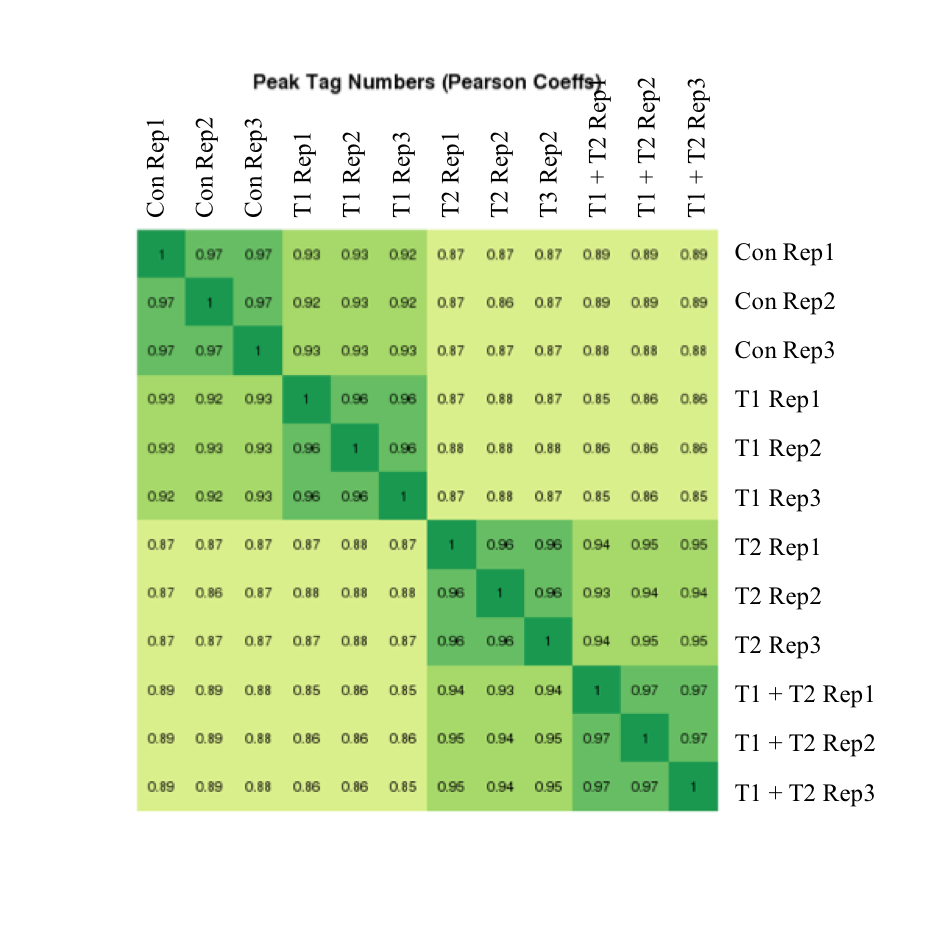
Figure 7: Active Motif’s ATAC-Seq data shows high reproducibility
The experiment above was performed using a cell line that was left untreated or treated under three different conditions and each condition was performed in triplicate. The correlation coefficients are presented in the heat map. Replicates have coefficients of at least 0.96. The heat map shows that the samples cluster into four distinct groups as expected.
ATAC-Seq Quality Measures
There are multiple ways to assess the quality of an ATAC-Seq data set. The two that are considered the most important are FRiP Score and Peak Number.
- FRiP Score: Fraction of Reads in Peaks is the percentage of reads that overlap within called peaks. It is a measure of the enrichment of open regions and can also be considered as a measure of signal-to-noise, with signal being reads that map in peaks and noise being reads that map outside of peaks. FRiP scores will vary depending on cell type. FRiP scores of >30% are a good indication of success. However, lower FRiP scores are acceptable in more difficult samples as long as there is consistency across those samples.
- Peak Number: Number of peaks identified in an ATAC-Seq data set. Data repository consortia like ENCODE recommend that data sets have more than 50,000 peaks identified. This however varies depending on the cell type, tissue and health of cells.

Figure 8: Active Motif’s optimized ATAC-Seq protocol results in increased FRiP scores.
Human embryonic progenitor cells (4D20.8 cell line and primary cells), human primary endothelial cells, human mesenchymal stem cells, and rat primary neonatal cardiomyocytes were processed with either the standard ATAC-Seq protocol* (blue), Omni ATAC-Seq protocol# (orange), or Active Motif’s ATAC-Seq protocol (purple). Active Motif’s ATAC-Seq protocol consistently gives higher FRiP scores in a variety of samples.
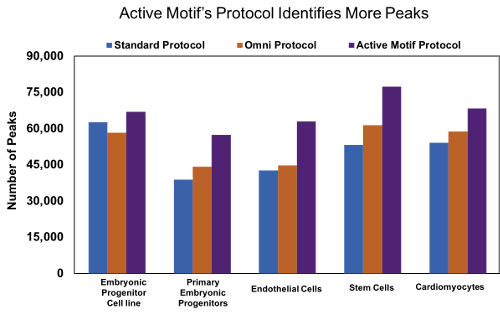
Figure 9: Active Motif’s optimized ATAC-Seq protocol results in increased number of peaks.
Human embryonic progenitor cells (4D20.8 cell line and primary cells), human primary endothelial cells, human mesenchymal stem cells, and rat primary neonatal cardiomyocytes were processed with either the standard ATAC-Seq protocol* (blue), Omni ATAC-Seq protocol# (orange), or Active Motif’s ATAC-Seq protocol (purple). Samples processed with Active Motif’s ATAC-Seq protocol consistently identify more peaks in a variety of samples.
References for ATAC-Seq & Omni ATAC-Seq publications
- Buenrostro, J.D. et al. Transposition of native chromatin for fast and sensitive epigenomic profiling of open chromatin, DNA-binding proteins and nucleosome position, Nature Methods. 2013; 10:1213-1218.
- Corces, M.R. et al. An improved ATAC-seq protocol reduces background and enables interrogation of frozen tissues, Nature Methods. 2017; 14:959-962.
ATAC-Seq Services Publications
Search our database of customer publications that have used our ATAC-Seq services.
ATAC-Seq Services Documents
ATAC-Seq Services Sample Submission Portal
Our online sample submission portal allows you to easily upload your service project samples and track your project status. Follow the sample submission instructions in the portal to ensure that all your samples arrive at Active Motif in the best possible condition and properly associated with your project.
You might also be interested in:
| Active Motif Epigenetic Services Brochure |
| Comprehensive ATAC-Seq Solutions Brochure |
| ATAC-Seq Sample Preparation |
| Epigenetic Services Citations |
图1:Active Motif的ATAC-Seq分析能够可靠地检测出开放染色质区域。
DNAse-Seq长期以来一直是产生开放染色质全基因组图谱的金标准,上图中蓝色显示。 因为DNAse-Seq需要数千万个细胞,并且在技术上具有挑战性,所以它的实用性受到限制。 Active Motif的ATAC-Seq(上图中以绿色显示)仅使用50,000个细胞,并提供与DNAse-Seq相当的数据。
图2:Active Motif的ATAC-Seq分析通过识别差异开放的染色质区域来区分样品组。
上面的示例显示了来自4个不同样本的ATAC-Seq数据,每个样本3次重复。 差异开放区域以黄色突出显示。
图3:使用ATAC-Seq识别重要的转录因子结合位点
可以分析差异开放的染色质区域的内在DNA序列,以鉴定最富集的转录因子结合位点。 在该细胞系统中,两个最丰富的结合基序也与B细胞生物学有关。 Fra1在B细胞激活后迅速上调,而PU.1是B细胞分化的关键调节因子。
图4:注释的启动子上相对于ATAC-Seq峰的组蛋白修饰分布
将ATAC-Seq数据与不同的组蛋白修饰ChIP-Seq数据集进行比较发现,启动子处的ATAC-Seq峰富含最多的H3K4me3和H3K9Ac。
图5:带注释的启动子外,相对于ATAC-Seq峰的组蛋白修饰分布
启动子外的ATAC-Seq峰富含所有活跃标记,包括增强子标记H3K27Ac和H3K4me1。
图6: Active Motif的组织样本ATAC-Seq数据
上图显示了使用冷冻的小鼠肝和肺组织的ATAC-Seq数据。 开放的染色质图谱类似于由ENCODE产生的DNAse-Seq图谱。
图7:Active Motif的ATAC-Seq数据显示出很高的重现性
使用未经处理或在三种不同条件下处理的细胞系进行上述实验,每种条件重复三次。 相关系数显示在热图中。 重复的相关系数至少为0.96。 热图显示,样品按预期分为四个不同的组。
ATAC-Seq Quality Measures
有多种方法可以评估ATAC-Seq数据的质量。最重要的两个是FRiP得分和峰数量。
- FRiP分数:全称Fraction of Reads in Peaks,代表的是与peaks有交叉的reads占总reads数的百分比。 它是对开放区域富集的一种度量,也可以看作是信噪比的度量,其中信号为比对到peak上的reads,噪音为比对到peak外的reads。 FRiP分数根据细胞类型而有所不同。 FRiP分数> 30%是成功的良好指标。 但是,对于一些难处理的样本,只要样本之间具有一致性,较低的FRiP分数也是可以接受的。
- 峰数量:在ATAC-Seq数据中识别出的峰的数量。 像ENCODE这样的数据库建议数据识别出50,000个以上的峰。 但是,这取决于细胞类型,组织和细胞健康状况。
图1:Active Motif优化的ATAC-Seq方法得到更高的FRiP分数使用标准ATAC-Seq方法*(蓝色),Omni ATAC-Seq方法#(橙色)或Active Motif的ATAC-Seq方法(紫色)处理人胚胎祖细胞(4D20.8细胞系和原代细胞),人原代内皮细胞,人间充质干细胞和大鼠原代心肌细胞。 使用Active Motif的ATAC-Seq方法处理的样品始终能在各种样品中鉴定出更多峰。
图2:Active Motif优化的ATAC-Seq实验方法使得峰的数量增加。使用标准ATAC-Seq方法*(蓝色),Omni ATAC-Seq方法#(橙色)或Active Motif的ATAC-Seq方法(紫色)处理人胚胎祖细胞(4D20.8细胞系和原代细胞),人原代内皮细胞,人间充质干细胞和大鼠原代心肌细胞。 使用Active Motif的ATAC-Seq方法处理的样品始终能在各种样品中鉴定出更多峰。
ATAC-Seq和Omni ATAC-Seq已发表的文献
- Buenrostro, J.D. et al. Transposition of native chromatin for fast and sensitive epigenomic profiling of open chromatin, DNA-binding proteins and nucleosome position, Nature Methods. 2013; 10:1213-1218.
- Corces, M.R. et al. An improved ATAC-seq protocol reduces background and enables interrogation of frozen tissues, Nature Methods. 2017; 14:959-962.
